

Editor’s Note
There is a point in every build where the conversation has to stop sounding smart and start becoming true.
That is what April feels like to me.
Over the last month, I have been in rooms that looked very different on the surface: a financial literacy session with students and community members trying to get a firmer grip on money, a liberation dinner grounded in visibility and protection, and the ongoing work of helping companies turn possibility into structure. What tied those rooms together was not aesthetics. It was architecture.
We are in a period where capital is getting more selective, infrastructure matters more than narrative alone, and category-defining companies are being forced to prove that they can do more than generate curiosity. They have to convert belief into traction, and traction into durable positioning.
That applies to portfolios. It applies to ecosystems. It applies to people.
The signal, right now, is not just who is moving. It is who is building something that can hold.
— B.

Opening Signal
April made one thing harder to ignore: infrastructure is now visible.
Not just technical infrastructure. Commercial infrastructure. Cultural infrastructure. Relationship infrastructure. The mechanisms underneath trust, access, adoption, and repeatability are no longer back-office matters. They are the market itself.
That shift is showing up everywhere at once: in diagnostics platforms moving from credibility to distribution, in consumer brands translating cultural memory into category creation, in AI’s appetite for power reshaping state-level energy decisions, and in founder ecosystems still doing the slower, more disciplined work of building durable local advantage.
Portfolio Pulse
Precision Epigenomics
Precision is starting to look less like a science story waiting for commercial validation and more like a company assembling the rails for scale. The quarter brought real progress across quality, access, and distribution: CAP accreditation, nationwide access through AZOVA, expansion into first-responder channels, white-label distribution, reimbursement-related momentum for EPISEEK-MPE, and a live clinical utilization study. The shape of the company is getting clearer. This is no longer just about technical promise. It is about whether Precision can turn clinical credibility into a defensible commercial footprint.
Signal: Precision is moving from technical legitimacy into commercial architecture.
Allocation Implication: The question is no longer whether the science is interesting. The question is whether Precision can convert compliance, channel partnerships, and reimbursement readiness into durable adoption before the category gets crowded by louder incumbents.
O’kra / Rejuvenation Beverage Company
O’kra is beginning to read like a category-making brand rather than a novelty product. Its debut at Natural Products Expo West put the brand inside a larger industry conversation around beverage innovation, while the product itself continues to carry a distinct point of view: ancestral ingredient, modern form, clear brand memory. That matters. The strongest emerging consumer brands do not just sell taste or trend. They make a product legible enough to remember and distinct enough to revisit.
Signal: O’kra is gaining early industry visibility while staying coherent in its brand language.
Allocation Implication: The next test is whether O’kra can convert attention into repeat velocity, broader distribution, and a stronger claim on the functional hydration and beauty-adjacent beverage lane before larger players copy the surface and miss the substance.
Links: Drink O’kra | Expo West trend coverage
In the Field
Money 101 at Glendale Community College
On March 23, B. led Money 101: Building Financial Stability from the Ground Up through Glendale Community College’s Women’s History Month programming. The session covered practical financial literacy topics, including credit, budgeting, savings, investing, and long-term financial growth, but what made it land was not the topic list. It was the framing.
The strongest throughline in the session was that money is a system, and if you do not understand it, it decides for you. B. made the conversation concrete through structure instead of shame: stability first, then diversification, then leverage. The “money buckets” framework gave participants a usable way to interpret financial pressure, especially in California, where the gap between ideal budgeting guidance and actual housing costs can make people feel behind when the real issue is structural. That reframing mattered.
The room itself was small, but the reception was strong. Participants stayed engaged, the polls landed, and the Q&A moved quickly into real-life decision points: high-yield savings accounts, credit strategy, emergency planning, and what it looks like to build financial stability without pretending the cost of living is reasonable.
That is worth paying attention to. The strongest educational moments are often not the ones with the largest room. They are the ones that give people language for the stress they were already carrying.
Gender Liberation Movement Dinner, Los Angeles
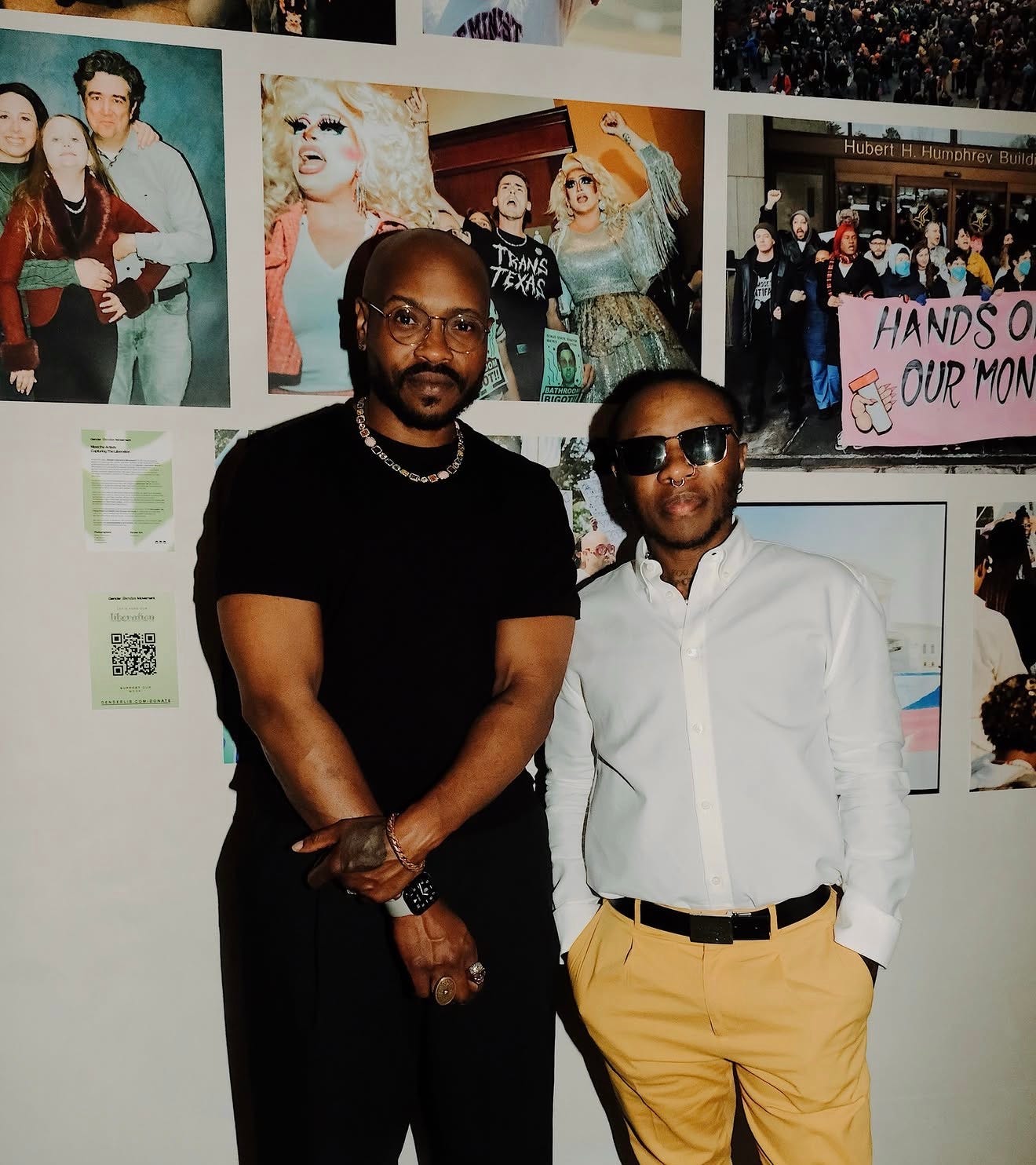
B. also attended the Gender Liberation Movement Liberation Dinner in Los Angeles, a gathering that Vogue described as joyful, intentionally gender-expansive, and grounded in both celebration and protection. It was not just a social event. It was a reminder that visibility, safety, coalition, and cultural legitimacy are all part of the same infrastructure story.
The rooms that matter are not only the rooms where deals are discussed directly. They are also the rooms where narrative, protection, and community commitment are clarified in public.
Market Signals
Texas
Texas continues to look like one of the clearest places where AI infrastructure and energy infrastructure are being negotiated together in public. Meta increased its planned investment in its El Paso AI data center to $10 billion, while separate reporting around power generation and data-center demand underscores the same larger point: compute is now a land, grid, and industrial-capacity story.
Signal: AI is no longer just a software narrative. In Texas, it is visibly becoming a power-and-infrastructure buildout story.
Allocation Implication: States that can absorb data-center demand, power demand, and industrial execution at the same time will keep attracting outsized project flow and secondary economic activity.
Louisiana
Louisiana is making a different but related play. Revised utility economics around Meta’s planned Richland Parish data center are being framed not only as headline investment, but as a structure that could deliver long-term customer savings while supporting major infrastructure expansion.
Signal: Louisiana is working to make hyperscale infrastructure politically and economically legible to ordinary ratepayers, not just corporate stakeholders.
Allocation Implication: The states that can make large-scale AI infrastructure feel locally beneficial will have a strategic edge over the states that can only market these projects as prestige wins.
Wyoming
Wyoming is now part of the next-generation energy conversation in a way that deserves attention. The approval of TerraPower’s reactor project in Kemmerer puts the state inside a larger story about advanced energy, national infrastructure priorities, and the rising pressure to support future compute demand with more dependable power.
Signal: Wyoming is no longer just a legacy-energy state in this conversation. It is part of the forward-energy map.
Allocation Implication: Interior states that can support advanced energy experimentation may gain structural importance as compute demand and industrial policy continue to raise the value of dependable power.
History Made in The Great 38™
FedEx | Memphis, Tennessee

Before logistics became fashionable language in venture, FedEx turned geography into infrastructure. Operations began in Memphis on April 17, 1973, and the company’s history still reads like a reminder that category-defining businesses do not always emerge from obvious innovation capitals. Sometimes they emerge from operational advantage, geographic leverage, and a founder who understands that execution can become a moat.
FedEx did not wait for Memphis to become culturally obvious. It made Memphis strategically unavoidable.
Upcoming Events
Conversations shaping venture capital, private markets, and founder ecosystems continue across several upcoming gatherings within the broader network.
HumanX 2026
April 6–9, 2026 | San Francisco
HumanX remains one of the densest April intersections for operators, investors, and enterprise decision-makers working at the AI layer.
Link: Register for HumanX
TechCon Silicon Valley 2026
April 6, 2026 | Moscone Center South, San Francisco
TechCon Silicon Valley is positioned as a one-day forum for founders, investors, and industry leaders through panels, keynotes, and curated networking.
Link: TechCon Silicon Valley
Build in Tulsa
Tulsa, Oklahoma
Build in Tulsa remains one of the clearest examples of deliberate founder infrastructure in motion. The organization’s mission is centered on building the world’s largest network of Black entrepreneurs and closing the racial wealth gap through entrepreneurship. Its current programming continues to reflect that broader commitment to founder development, capital access, and ecosystem design.
DVRGNT’s attention here is not symbolic. It reflects a real commitment to the regional systems that make more equitable venture participation possible.
Links: Build in Tulsa | Events
NAIC Women Who Rock Mixer
April 28, 2026 | New York, NY
A women-centered networking gathering across the alternative investing ecosystem.
Link: NAIC events
NAIC Spring Fling
April 29, 2026 | New York, NY
A reception convening leaders across alternative asset management, including allocators, managers, and industry partners.
Link: Register for Spring Fling
Final Signal
The pattern is easier to see now.
The companies worth watching are not merely the ones getting attention. They are the ones translating credibility into channels, channels into adoption, and adoption into leverage.
The states worth watching are not merely the ones announcing ambition. They are the ones retooling energy, utility, and industrial logic fast enough to absorb what comes next.
And the rooms worth paying attention to are not just the rooms where capital is discussed directly. They are the rooms where trust, language, legitimacy, and community become more durable.
That is the signal.