



It should have been a simple moment. One of our portfolio companies had just secured a purchase order from Sprouts Farmers Market, the kind of milestone that signals a real transition from building to scaling. For any consumer founder, that moment carries weight. It represents validation, distribution, and the possibility that something built from scratch is about to exist in a much larger world. Under normal circumstances, it is the kind of milestone that invites celebration.
But this one did not feel that way.
Instead, the excitement was quickly replaced by a quieter, more practical tension. Retail operates on its own timeline. Payment cycles often stretch 60 to 90 days, which means that by the time a founder receives revenue, the costs of producing inventory, packaging, and logistics have already been incurred. The question becomes less about opportunity and more about timing. How do you fund the gap between delivery and payment?
In theory, there is a clear answer. Purchase order financing, sometimes referred to as factoring, exists for this exact reason. It allows companies to borrow against confirmed invoices and manage the gap between cash outflows and inflows. On paper, it is a standard tool within consumer packaged goods. In practice, it introduces a different kind of scrutiny.
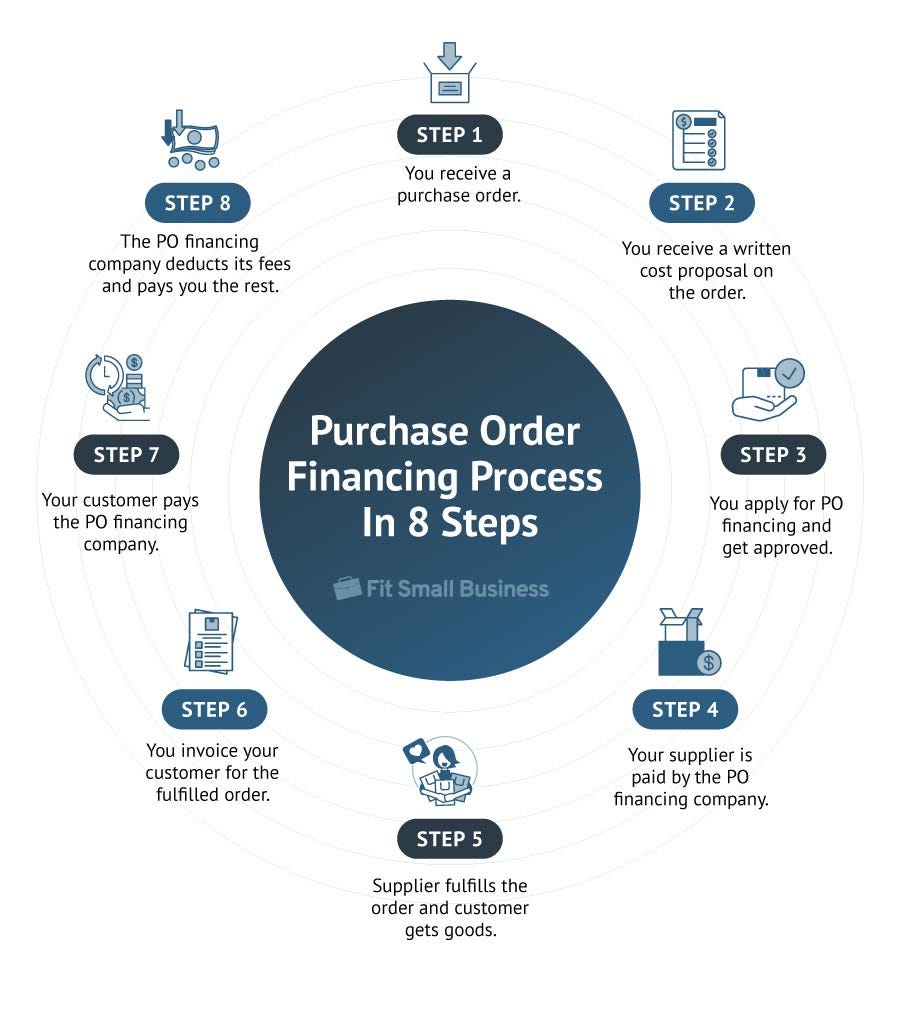
The moment you engage with a lender, the conversation shifts. It moves away from product, brand, and vision, and toward structure. Lenders want to understand the underlying financial reality of the business. They ask for profit and loss statements, balance sheets, historical tax returns, and clean general ledgers. These are not optional artifacts. They are the basis on which risk is evaluated.
In this case, that shift revealed something important. The challenge was not the purchase order itself, nor the product, nor the availability of capital. It was the financial infrastructure behind the business. While tools like QuickBooks had been used, the underlying systems had not been configured in a way that could withstand external scrutiny. The business had grown, but the financial architecture had not evolved alongside it.
This is not an uncommon situation. Many founders, particularly those building for the first time or operating without deep financial exposure, develop their companies in a sequence that prioritizes momentum over structure. They learn how to build products, attract customers, and tell compelling stories long before they are required to produce lender-ready financials. For a long time, that gap remains invisible.
It only becomes visible when scale demands it.
According to data from the U.S. Small Business Administration, issues related to financial management are consistently among the leading causes of business failure. This is not typically a reflection of a founder’s capability or ambition. It reflects a broader structural gap in how early-stage ecosystems prepare founders for growth. We celebrate funding milestones and retail expansion, but we spend far less time ensuring that the systems behind those milestones are durable.
What initially appeared to be a moment of success ultimately became something else entirely. It became a diagnostic. Not of the founder, but of the system surrounding the founder. And it set the stage for what happened next, a moment that reframed how we think about venture support altogether.